
How to Support Our Children With Big Feelings

Guest Blog by Tracey McGowan, founder of Mini Minds Co.
Let’s be honest, we’ve all been there. Meltdowns, tears, shouting. Often it’s over something so
small like the plate you’ve put their dinner on (anyone else relate?). One minute you child is
calm and the next they are completely overwhelmed. As a parent, it can feel so frustrating,
worry and exhausting – am I right?
But here’s the truth: big feelings are a normal part of child development.
Children often feel things deeply. Their emotions are raw, intense and all-consuming for them,
especially in the early years when their brains are still developing. What they need most in these
moments isn’t necessarily ‘fixing’ the problem or punishment, it’s connection and co-regulation.
As a parent, it’s not your job to stop big feelings from happening, because trust me, they will
happen anyway! It’s to help your child feel safe and build the self-confidence to move through
them.
Mini Minds Co
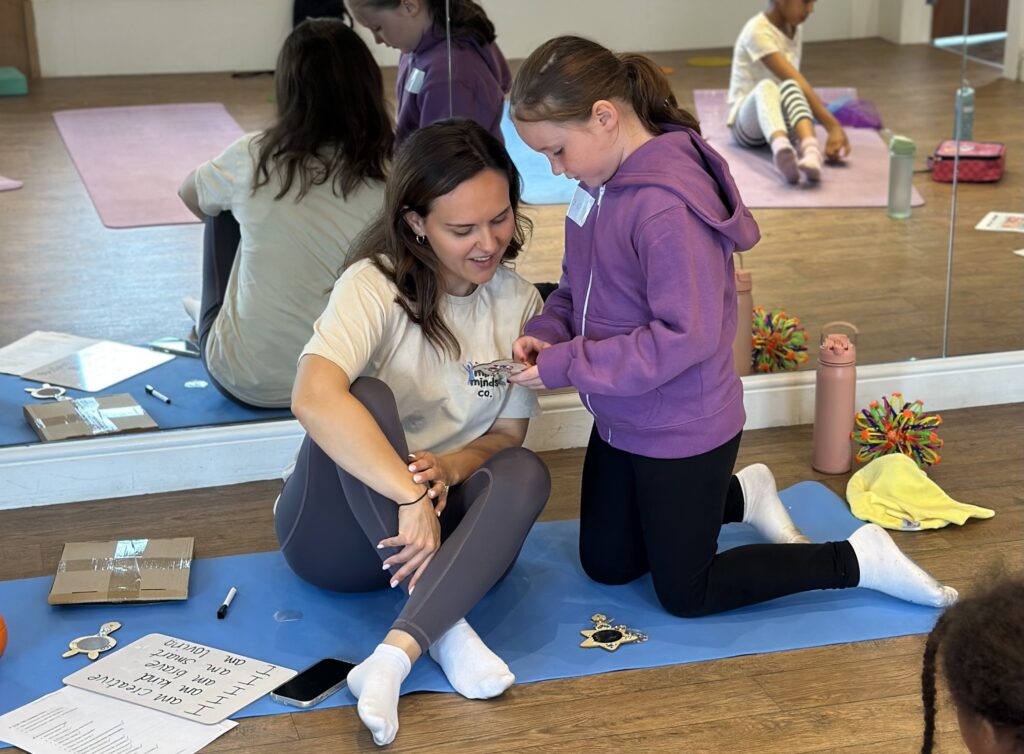
At Mini Minds Co., I support children aged 2-11 with tools to build emotional resilience through
movement, mindfulness, breathwork and creative play. And what I’ve seen time and time again
is that when children feel safe, they slow down enough to self-regulate, not straight away but
gradually, with small steps.
Why Big Feelings Happen:
Let’s explore a few ways you can support your child through big emotions.
When children are having a meltdown or outburst, they’re not being “naughty” or “trying to get
attention” (despite popular belief). They are dysregulated. Their nervous system has kicked into
survival mode, and their brain is flooded with emotions.
In these moments, they might:
● Fight – lash out, shout, or become aggressive
● Flight – try to run away, shut down, or avoid eye contact
● Freeze – go quiet or become unresponsive
Their thinking brain (prefrontal cortex) temporarily goes offline, and their feeling brain
(amygdala) takes over.
That’s why logic and reasoning often don’t work during an outburst.
5 Simple Ways to Support Big Emotions
These strategies aren’t magic fixes, but they’re powerful when practiced consistently:
- Breathe First (You Too!)
Take one deep breath before you respond. When your child is spiralling, your calm body helps
bring theirs back to safety. Regulation is contagious. If you are in a heightened state, trust me
they will notice it. - Name the Feeling
Children often don’t know what they’re feeling just that it’s big and overwhelming. Maybe you
say something like “It looks like you’re feeling really angry” or “I wonder if you’re feeling
worried.” It helps them feel seen and builds emotional literacy over time, which is also key for
managing emotions effectively. - Offer a Choice
Big feelings often come from a sense of powerlessness. Offering two simple choices can help:
“Would you like to sit on the chair or the floor?”
“Shall we do five breaths or draw a picture of the feeling?”
This gives your child a sense of control in a world that sometimes feels overwhelming. - Use a Breathwork Tool Together
One of our favourites is Five-Finger Breathing:
Trace the fingers of one hand with the other. As you trace up, breathe in. As you trace down,
breathe out. Do it as slowly as possible, and mirror that for them. It gives their mind and body
something to focus on. - Create a Calm Routine
A lot of distressed behaviour happens right after school or nursery, when your child is tired,
overstimulated, and holding in all the feelings from the day. Maybe try making a “calm corner’ (it
doesn’t need to be big – maybe just a beanbag and some books/sensory toys), a snack and
cuddle on the sofa, or five minutes of quiet music and breathing before asking them questions
about their day.
Why Calm Needs to Come Before Confidence:
At Mini Minds Co., our sessions are designed to help children feel safe in their own bodies first.
Only then can they begin to express themselves, explore new tools, and grow in confidence.
So many parents ask, “How can I help my child be more confident?”
And to be honest, it really starts with helping them feel calm and safe first. And then when they
feel support, that confidence often follows.
Final Thoughts (You’re Doing Better Than You Think):
If your child is struggling with big feelings, you are not alone and neither are they.
There’s no perfect script for emotional regulation, but there are simple tools that make a
difference over time. Start with just one of the above, and also know that they WILL have bad
days where it feels like nothing is working, and this is okay too.
If you’d love more support, I’d love to welcome you to a Mini Minds Co. workshop – a calm,
creative space where children can explore their emotions and grow their emotional toolkit.
Get In Touch
You can find me at @miniminds_co on Instagram for upcoming sessions across South
Lanarkshire and Glasgow.
In the meantime, just know you’re doing a great job!
